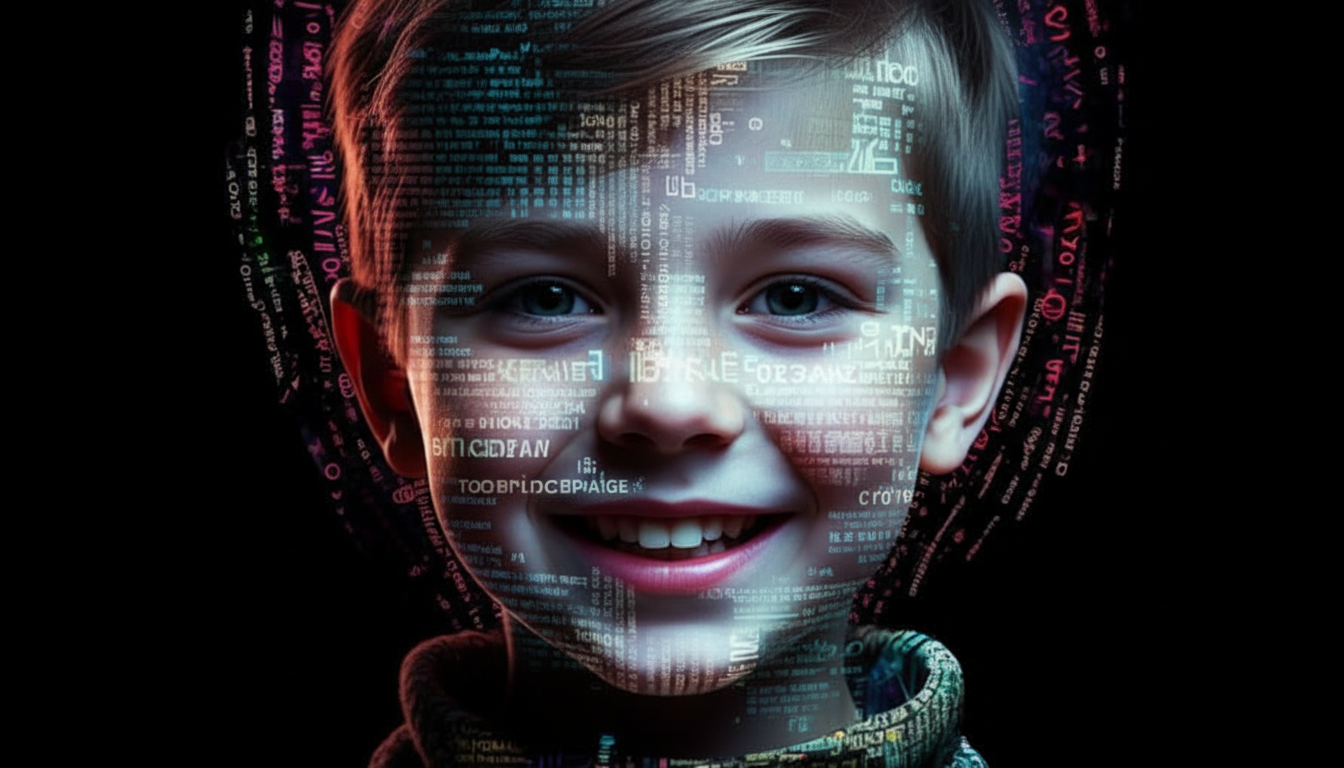
How Programming Affects the Brain and Develops a Child
Today, there is increasing discussion about how programming changes future professions, but it is equally important how it affects a child’s development. Large companies and scientists refer to coding as “new literacy”: according to Steve Jobs, “everyone should learn to program a computer, because it teaches you how to think.”
Research shows that coding activities and logical chains of tasks train attention, memory, and the ability to plan actions. Meta-analyses of dozens of studies note that children who regularly learn programming are more likely to succeed in tasks involving logic, mathematics, and solving non-standard problems.
Contents
- Why Children Need Programming
- What Does Programming Develop in Children? Logical and Systemic Thinking
- Impact on the Brain and Cognitive Functions
- How Programming Helps in School and Everyday Tasks
- When to Start Learning Programming
- How to Interest a Child in Programming
- Learning and Resources: Formats and Materials
- Programming and the Child’s Future: Development Paths
- Summary for Parents: Key Points from the Article
Why Children Need Programming
One of the main reasons parents choose programming education is the development of thinking skills that will be useful far beyond IT.
When a child learns programming languages, they constantly:
- break a large task into steps and build logical chains;
- check where exactly the logic was broken and look for a fix;
- learn to calmly treat mistakes and perceive them as part of the process.
Research shows that children who regularly solve coding tasks are more likely to succeed in assignments involving analysis, planning, and working with abstractions. At the same time, not only the knowledge itself is important, but also the environment around it: when adults support interest rather than demand immediate success, the child is more willing to take on new levels of difficulty.
In addition, code gives the child a sense of control: they see how a line of text turns into a game, cartoon, or website. This develops confidence and interest in complex projects — qualities that are valued in any field
What Does Programming Develop in Children? Logical and Systemic Thinking
Even the simplest programming languages require a child to build logical chains: “if an event occurs — this block will execute,” “repeat the action while the condition is true.”
Regular exercises:
- strengthen the ability to analyze task conditions;
- teach seeing connections between parts of a system, not only individual steps;
- help transfer this approach to other subjects — from mathematics to natural sciences.
Informatics teachers note that children who are introduced to code early gradually make logical reasoning a habitual way of thinking: they more easily explain how they arrived at an answer and can defend their solution.
Creativity and Inventiveness
Despite strict rules, programming is excellent for creativity. The child:
- creates their own stories and characters;
- combines modules and libraries, producing unusual effects;
- experiments with different ways to solve the same task.
Scientists increasingly discuss what programming develops in childhood: it is not only work with technology, but also the ability to invent how characters, robots, and game heroes should “behave.” In the process, the child learns to formulate hypotheses and test them, which means confidently working with the unknown.
Attention, Patience, and Seeing a Project Through to Completion
Any error in code immediately becomes visible: the program does not start or does not work as intended. Working with programming teaches:
- to carefully read conditions and error messages;
- to test hypotheses step by step, without skipping details;
- to complete a project rather than abandoning it at the first difficulty.
Teachers often notice that children who regularly study programming become more precise in other subjects as well: it is easier for them to check solutions, rewrite unsuccessful drafts, and see progress between the first and the last attempt.
Impact on the Brain and Cognitive Functions
A child’s brain is highly plastic, and coding activities become a kind of training tool for the brain. Modern meta-analytical reviews show that programming is associated with improvements in:
- working memory;
- cognitive flexibility;
- the ability to switch between tasks.
Scientists describe how programming activates brain areas related to planning and action control. At the same time, it is important that these activities do not replace other types of activity, but complement them: physical exercise and outdoor play support brain health just as much as intellectual training.
When a child solves tasks related to different programming languages, they constantly return to already familiar structures, strengthening neural pathways. This forms a more stable skill of working with information.
How Programming Helps in School and Everyday Tasks
The skills that programming provides directly affect school subjects and everyday situations. In school:
- it is easier to solve word problems in mathematics by breaking them down into steps;
- it is simpler to work on projects in natural sciences that require data analysis;
- the habit of testing hypotheses is formed instead of simply memorizing rules.
In everyday life:
- the child can automate simple things — from to-do lists to reminders;
- they better understand how the applications and websites they use every day are structured;
- they are calmer around technology, understanding that there is clear programming behind it.
Over time, many children begin to apply the “programmer’s approach” outside the computer as well: planning how to allocate pocket money, creating a study schedule for tests, thinking through which steps are needed to implement their own project — from a school event to a small business.
When to Start Learning Programming
There is no single “correct” age: it is important to consider the child’s interest and temperament.
In general, the stages can be divided as follows:
- 5–7 years — games with simple algorithms, board tasks, and visual environments without text;
- 8–10 years — first block-based languages, projects in Scratch and other children’s environments;
- 11–14 years — transition to text-based programming languages, including Python and JavaScript;
- senior grades — advanced courses and specialized directions.
The good news for parents is that it is possible to start at any age: some children become interested in code in primary school, while others come to it through an interest in design, music, or robotics during their teenage years. The main thing is to choose the level so that the child sees a manageable challenge rather than a solid wall of difficulties.
How to Interest a Child in Programming
How to Interest a Child in Programming
Parents do not need to master programming themselves in order to support interest. Simple steps will help:
- start with topics that are close to the child: games, cartoons, music, favorite bloggers;
- offer short tasks and small projects rather than immediately a “big game”;
- praise not only the result, but also the attempts to understand.
Additionally, you can come up with “family” mini-projects: create an interactive greeting card for a grandmother, build a simple chatbot together that answers playful questions, or invent a quest game based on a favorite book. It is important that the child feels that adults are also interested in what they are doing and are ready to listen to their ideas, even if the results are not yet perfect.
Learning and Resources: Formats and Materials
There are now more options available than ever before: from free online platforms to offline clubs. It is important to choose a format that matches the child’s age and level.
Main options:
- clubs at schools and technology parks — suitable for those who value direct contact and group work;
- online courses — convenient if there is no club nearby or if a flexible schedule is needed;
- independent study using books and interactive platforms, when the child is already sufficiently motivated.
It is useful to pay attention to:
- whether the course has a clear learning program with gradual progression in difficulty;
- which programming languages and tools are used;
- whether there are projects where the child can try themselves in the role of an author.
The online IT school RTS offers flexible learning: classes from home, different levels and directions, and mentor support. This helps to structure programming education as part of the overall educational trajectory, rather than as a one-time club activity.
Programming and the Child’s Future: Development Paths
Even if a child does not become a professional developer, programming remains an important part of digital literacy. The ability to understand how algorithms and data are structured helps in a wide range of professions — from engineering to the humanities.
For those who want to connect their career with IT, early exposure to different programming languages provides more opportunities: they can try themselves in creating games, websites, mobile applications, and data analytics. As they grow older, the teenager can consciously choose which programming language and which direction to study in greater depth.
At the same time, along with technical skills, “soft” skills are also developed: teamwork, the ability to explain one’s decisions, accept criticism, and complete what has been started. All of this is important in any future profession.
Summary for Parents: Key Points from the Article
In short, the main idea of the article is that programming is not only about computers, but also about the development of a child’s brain. It helps build logical reasoning, trains attention, patience, and the ability to complete tasks.
By supporting an interest in programming, you give the child a tool with which they can learn, create, and solve real problems. It is not necessary to make them a programmer: what is important is that they understand that technologies can be clear and manageable if you know how to “speak the same language” with them. Then programming will become not a frightening mystery, but a familiar and useful skill that opens up more freedom and choice for the child in the future.
-
 16.12.2025
Programming in Minecraft for Children
How Minecraft helps kids understand programming: simple tools, visual blocks, and first projects. Learn more on the RTS blog
-
 16.12.2025
The Profession of Programmer for Children
We explain why programming is becoming an essential skill for the future and how children can begin their journey into IT. At…
-
 08.02.2026
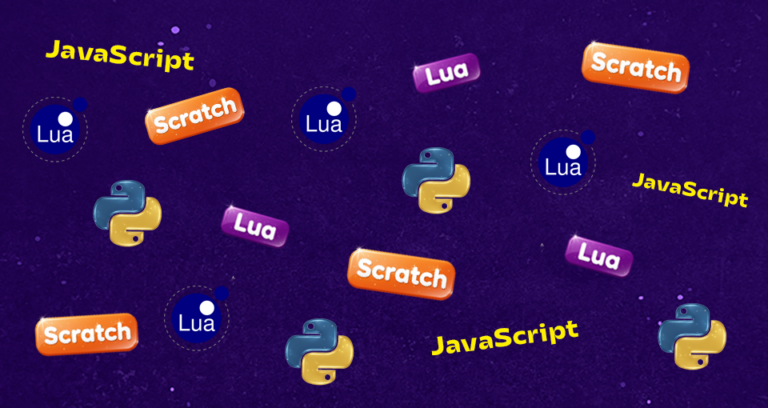
Programming Languages for Children
We break down which programming languages suit children of different ages — from Scratch to Python. At RTS School, we guide you…
-
 08.04.2026
7 Games for Teaching Children Programming
A selection of 7 games that develop logic and coding basics in children: from visual puzzles to first projects. At RTS School,…
-
 26.02.2026
Programming Tasks for Children
Подборка задач A selection of programming tasks for kids: visual languages, first Python assignments, and difficulty levels by age. We explain how…
-
 15.04.2026
10 Best Free Coding Courses for Kids
Discover the top 10 free coding resources for kids. From block-based games to real-world Python projects, find the perfect start for your…