
How Programming Affects the Brain and Develops a Child
Author: Rocket Tech School
Publication date: 08.04.2026 | Review date: 15.04.2026
Today, there is increasing discussion about how programming changes future professions, but it is equally important how it affects a child’s development. Large companies and scientists refer to coding as “new literacy”: according to Steve Jobs, “everyone should learn to program a computer, because it teaches you how to think.”
Research shows that coding activities and logical chains of tasks train attention, memory, and the ability to plan actions. Meta-analyses of dozens of studies note that children who regularly learn programming are more likely to succeed in tasks involving logic, mathematics, and solving non-standard problems.
Research shows that coding activities and logical chains of tasks train attention, memory, and the ability to plan actions. Meta-analyses of dozens of studies note that children who regularly learn programming are more likely to succeed in tasks involving logic, mathematics, and solving non-standard problems.
Table of Contents
1. Why children need programming
2. What programming develops in children: logical and systemic thinking
2.2 Creativity and inventiveness
2.3 Attention, patience, and completing tasks
3. Influence on the brain and cognitive functions
4. How programming helps in learning and everyday tasks
5. When to start learning programming
6. How to interest a child in programming
7. Learning and resources: formats and materials
8. Programming and the child’s future: development paths
9. Summary for parents: key points from the article
2. What programming develops in children: logical and systemic thinking
2.2 Creativity and inventiveness
2.3 Attention, patience, and completing tasks
3. Influence on the brain and cognitive functions
4. How programming helps in learning and everyday tasks
5. When to start learning programming
6. How to interest a child in programming
7. Learning and resources: formats and materials
8. Programming and the child’s future: development paths
9. Summary for parents: key points from the article
Why Children Need Programming
One of the main reasons parents choose programming education is the development of thinking skills that will be useful far beyond IT.
When a child learns programming languages, they constantly:
In addition, code gives the child a sense of control: they see how a line of text turns into a game, cartoon, or website. This develops confidence and interest in complex projects — qualities that are valued in any field
When a child learns programming languages, they constantly:
- break a large task into steps and build logical chains;
- check where exactly the logic was broken and look for a fix;
- learn to calmly treat mistakes and perceive them as part of the process.
In addition, code gives the child a sense of control: they see how a line of text turns into a game, cartoon, or website. This develops confidence and interest in complex projects — qualities that are valued in any field
What Does Programming Develop in Children? Logical and Systemic Thinking
Even the simplest programming languages require a child to build logical chains: “if an event occurs — this block will execute,” “repeat the action while the condition is true.”
Regular exercises:
Regular exercises:
- strengthen the ability to analyze task conditions;
- teach seeing connections between parts of a system, not only individual steps;
- help transfer this approach to other subjects — from mathematics to natural sciences.
Creativity and Inventiveness
Despite strict rules, programming is excellent for creativity. The child:
- creates their own stories and characters;
- combines modules and libraries, producing unusual effects;
- experiments with different ways to solve the same task.
Attention, Patience, and Seeing a Project Through to Completion
Any error in code immediately becomes visible: the program does not start or does not work as intended. Working with programming teaches:
- to carefully read conditions and error messages;
- to test hypotheses step by step, without skipping details;
- to complete a project rather than abandoning it at the first difficulty.
Impact on the Brain and Cognitive Functions
A child’s brain is highly plastic, and coding activities become a kind of training tool for the brain. Modern meta-analytical reviews show that programming is associated with improvements in:
When a child solves tasks related to different programming languages, they constantly return to already familiar structures, strengthening neural pathways. This forms a more stable skill of working with information.
- working memory;
- cognitive flexibility;
- the ability to switch between tasks.
When a child solves tasks related to different programming languages, they constantly return to already familiar structures, strengthening neural pathways. This forms a more stable skill of working with information.
How Programming Helps in School and Everyday Tasks
The skills that programming provides directly affect school subjects and everyday situations. In school:
- it is easier to solve word problems in mathematics by breaking them down into steps;
- it is simpler to work on projects in natural sciences that require data analysis;
- the habit of testing hypotheses is formed instead of simply memorizing rules.
- the child can automate simple things — from to-do lists to reminders;
- they better understand how the applications and websites they use every day are structured;
- they are calmer around technology, understanding that there is clear programming behind it.
When to Start Learning Programming
There is no single “correct” age: it is important to consider the child’s interest and temperament.
In general, the stages can be divided as follows:
In general, the stages can be divided as follows:
- 5–7 years — games with simple algorithms, board tasks, and visual environments without text;
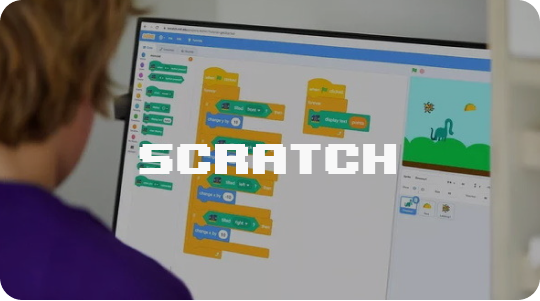
- 8–10 years — first block-based languages, projects in Scratch and other children’s environments;
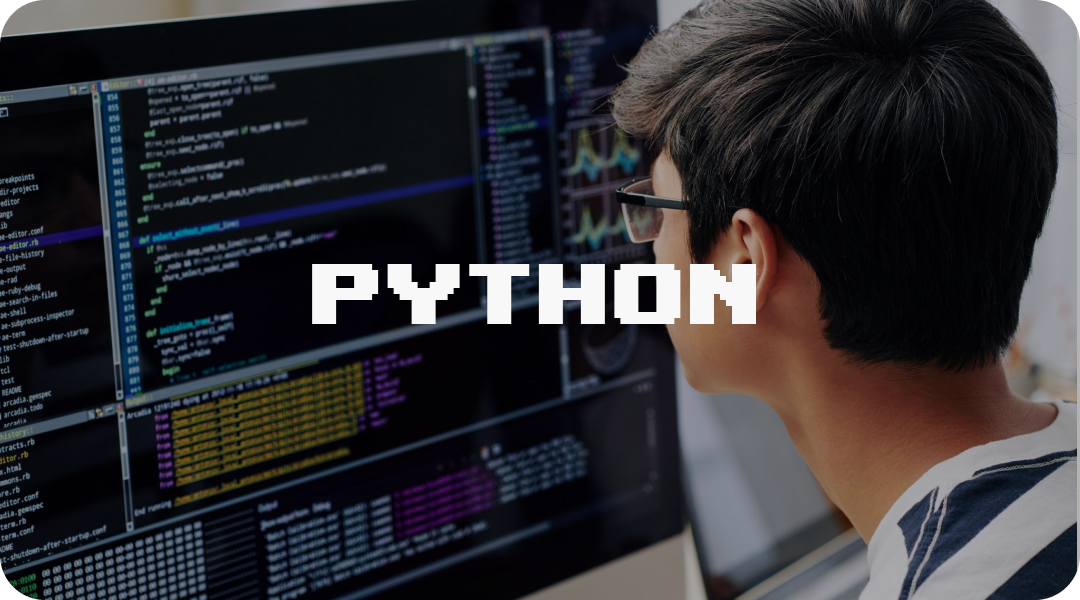
- 11–14 years — transition to text-based programming languages, including Python and JavaScript;
- senior grades — advanced courses and specialized directions.
How to Interest a Child in Programming
How to Interest a Child in Programming
Parents do not need to master programming themselves in order to support interest. Simple steps will help:
Parents do not need to master programming themselves in order to support interest. Simple steps will help:
- start with topics that are close to the child: games, cartoons, music, favorite bloggers;
- offer short tasks and small projects rather than immediately a “big game”;
- praise not only the result, but also the attempts to understand.
Learning and Resources: Formats and Materials
There are now more options available than ever before: from free online platforms to offline clubs. It is important to choose a format that matches the child’s age and level.
Main options:
Main options:
- clubs at schools and technology parks — suitable for those who value direct contact and group work;
- online courses — convenient if there is no club nearby or if a flexible schedule is needed;
- independent study using books and interactive platforms, when the child is already sufficiently motivated.
- whether the course has a clear learning program with gradual progression in difficulty;
- which programming languages and tools are used;
- whether there are projects where the child can try themselves in the role of an author.
Programming and the Child’s Future: Development Paths
Even if a child does not become a professional developer, programming remains an important part of digital literacy. The ability to understand how algorithms and data are structured helps in a wide range of professions — from engineering to the humanities.
For those who want to connect their career with IT, early exposure to different programming languages provides more opportunities: they can try themselves in creating games, websites, mobile applications, and data analytics. As they grow older, the teenager can consciously choose which programming language and which direction to study in greater depth.
At the same time, along with technical skills, “soft” skills are also developed: teamwork, the ability to explain one’s decisions, accept criticism, and complete what has been started. All of this is important in any future profession.
For those who want to connect their career with IT, early exposure to different programming languages provides more opportunities: they can try themselves in creating games, websites, mobile applications, and data analytics. As they grow older, the teenager can consciously choose which programming language and which direction to study in greater depth.
At the same time, along with technical skills, “soft” skills are also developed: teamwork, the ability to explain one’s decisions, accept criticism, and complete what has been started. All of this is important in any future profession.
Summary for Parents: Key Points from the Article
In short, the main idea of the article is that programming is not only about computers, but also about the development of a child’s brain. It helps build logical reasoning, trains attention, patience, and the ability to complete tasks.
By supporting an interest in programming, you give the child a tool with which they can learn, create, and solve real problems. It is not necessary to make them a programmer: what is important is that they understand that technologies can be clear and manageable if you know how to “speak the same language” with them. Then programming will become not a frightening mystery, but a familiar and useful skill that opens up more freedom and choice for the child in the future.
By supporting an interest in programming, you give the child a tool with which they can learn, create, and solve real problems. It is not necessary to make them a programmer: what is important is that they understand that technologies can be clear and manageable if you know how to “speak the same language” with them. Then programming will become not a frightening mystery, but a familiar and useful skill that opens up more freedom and choice for the child in the future.
What else is useful to read:
Programming, game development, digital creativity, and AI — choose an IT track that fits your child's age and interests!
6 courses to choose from: from animation to neural networks





Другие курсы



Rocket tech school LLC (USA)
401 Ryland Street, STE 200-A Reno, NV 89502 USA
IE Diana Kornigor, tax number 345724371 (Georgia)
2025
401 Ryland Street, STE 200-A Reno, NV 89502 USA
IE Diana Kornigor, tax number 345724371 (Georgia)
2025